
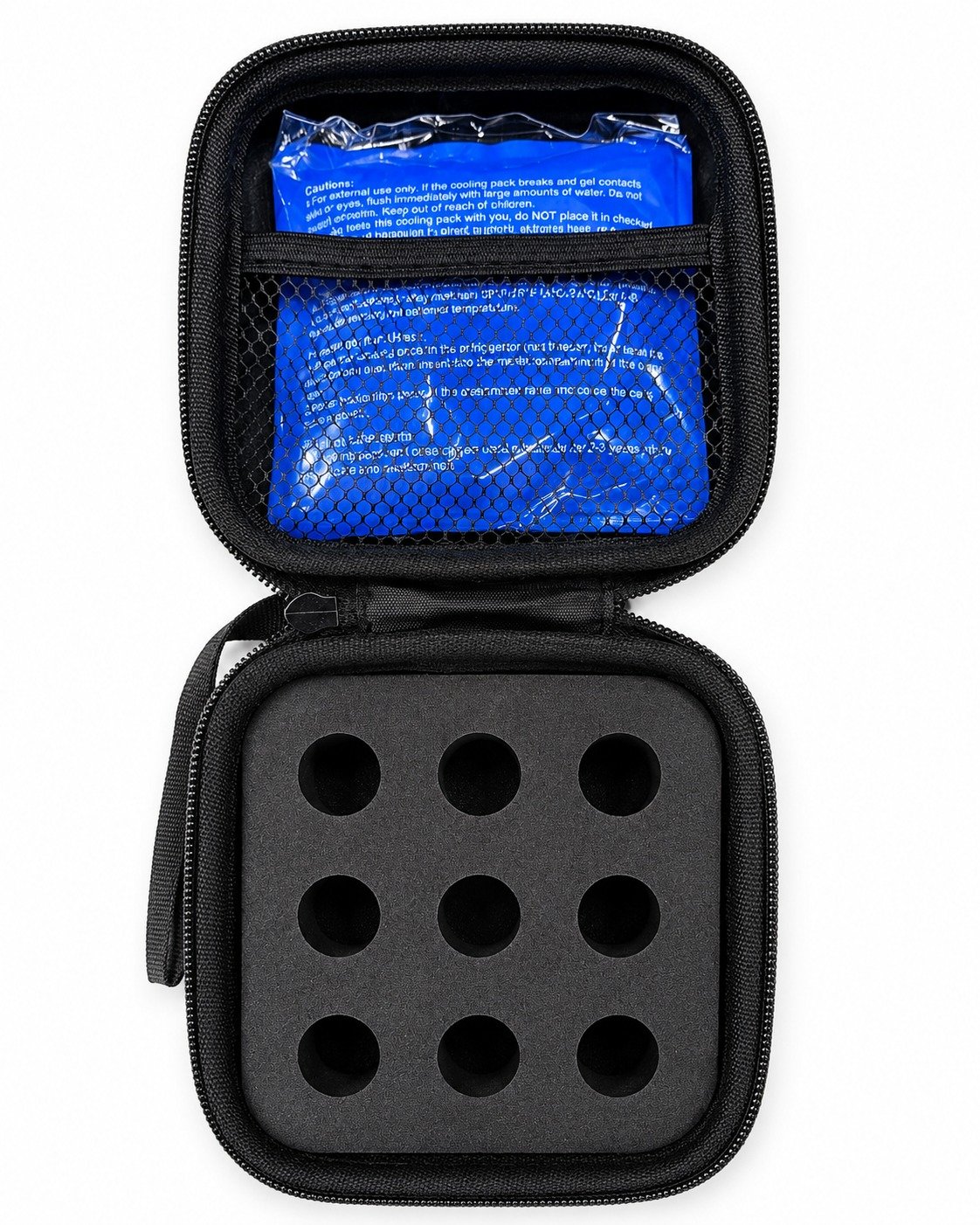
Buy Peptide Case
€10.00
This is where a dedicated peptide case becomes an essential piece of biohacking gear. Whether you are storing vials in your refrigerator at home or traveling across the country, using the right storage solution ensures your compounds remain potent, effective, and safe to use.
The Ultimate Guide to Choosing the Perfect Peptide Case
Peptides like BPC-157, TB-500, GHK-Cu, and Semaglutide have completely revolutionized the fields of recovery, anti-aging, and health optimization. However, once you invest in high-quality research compounds, proper storage becomes your top priority. Peptides are highly fragile molecules that can easily degrade if exposed to the wrong environmental factors.
This is where a dedicated peptide case becomes an essential piece of biohacking gear. Whether you are storing vials in your refrigerator at home or traveling across the country, using the right storage solution ensures your compounds remain potent, effective, and safe to use.
Here is everything you need to know about choosing, using, and maximizing your peptide case.
Why You Need a Dedicated Peptide Case
You might be wondering why you can’t just toss your peptide vials into a standard bag or leave them on a shelf. The answer lies in the chemical instability of peptides.
When exposed to heat, light, moisture, and physical agitation, the amino acid chains that make up peptides can break down (a process known as denaturation). A high-quality peptide case is specifically engineered to mitigate these risks by providing:
- Temperature Regulation: Keeping reconstituted peptides in the optimal 2°C to 8°C (36°F to 46°F) range.
- UV and Light Protection: Shielding light-sensitive compounds from degrading.
- Physical Protection: Preventing glass vials from shattering or rubber stoppers from being compromised during transit.
- Organization: Keeping your dosing schedule and vial types neatly sorted.
Key Features to Look for in a Peptide Case
Not all storage solutions are created equal. When shopping for a peptide case, look for the following features to ensure your compounds stay protected:
1. Thermal Insulation
If you are traveling or commuting, your case must be able to maintain a cool temperature. Look for cases with thick, closed-cell foam insulation or double-walled construction. Many premium cases also include dedicated pockets for gel ice packs or phase-change materials to keep the internal environment strictly within the safe temperature zone.
2. UV-Blocking Materials
Light exposure can rapidly degrade certain peptides. The best cases feature dark, opaque exteriors and UV-blocking interior linings to ensure your vials are kept in total darkness when closed.
3. Customizable Vial Inserts
Glass vials clinking together can damage the rubber stoppers or cause micro-fractures in the glass. A proper peptide case should include customizable EVA foam inserts, silicone dividers, or elastic loops that hold each vial securely in place.
4. Hard-Shell Durability
For travel, a hard-shell exterior (often made from impact-resistant EVA or polycarbonate) is crucial. It protects the fragile glass vials inside from being crushed in a gym bag, luggage, or backpack.
Top Types of Peptide Cases
Depending on your lifestyle and how you use your compounds, you may need different types of cases:
- The Travel Cooler Case: Ideal for flying or long road trips. These are heavily insulated, leak-proof, and designed to hold ice packs alongside your vials for up to 48 hours.
- The Hard-Shell EVA Organizer: Perfect for daily carry or gym bags. These offer excellent drop and crush protection, keeping your vials organized and safe from physical impact.
- The Desktop/Fridge Tray: Designed specifically for home use. These are compact, stackable organizers that fit perfectly on a refrigerator shelf, keeping your lyophilized (powder) and reconstituted (liquid) vials neatly separated.
Best Practices for Peptide Storage
Even the best peptide case won’t save your compounds if basic storage protocols aren’t followed. Keep these golden rules in mind:
- Lyophilized vs. Reconstituted: Unreconstituted (freeze-dried) peptides are relatively stable and can be kept at room temperature for short periods, but long-term storage should still be in a cool, dark place. Once mixed with bacteriostatic water, they must be kept refrigerated.
- Avoid the Freezer: Never freeze reconstituted peptides. The freeze-thaw cycle will destroy the peptide bonds.
- Mind the Fridge Door: The temperature in a refrigerator door fluctuates wildly every time it is opened. Store your peptide case on a middle or bottom shelf where the temperature remains consistently cold.
- Keep it Upright: Always store your vials upright to prevent the liquid from constantly resting against the rubber stopper, which can degrade the seal over time.
Conclusion
Your health and recovery protocols are only as good as the compounds you use. Protecting your investment starts with proper storage. By investing in a high-quality, insulated, and organized peptide case, you ensure that every drop of BPC-157, TB-500, or Semaglutide you draw up is as potent and effective as the day it was manufactured.
Don’t let improper storage ruin your hard-earned progress. Upgrade your biohacking gear today and give your peptides the protection they deserve.
Frequently Asked Questions (FAQ)
Can I use a regular pill organizer for my peptides? No. Standard pill organizers do not offer temperature control, UV protection, or the physical padding required to protect fragile glass vials and rubber stoppers. Always use a dedicated peptide case.
How long do reconstituted peptides last in a peptide case? When stored properly in a refrigerated peptide case (between 2°C and 8°C), most reconstituted peptides remain stable and potent for 3 to 4 weeks. Always check the specific guidelines for your compound.
Do I need an insulated peptide case for home storage? If you are storing your case directly inside your refrigerator, a heavily insulated travel cooler isn’t strictly necessary. A hard-shell EVA organizer with foam inserts is usually sufficient for home fridge storage, provided your fridge maintains a consistent temperature.
Related products
Anti-aging Research
Price range: €47.00 through €70.00
Anti-aging Research
Price range: €30.00 through €115.00
Anti-aging Research
Price range: €54.00 through €70.00
Anti-aging Research
€134.00
Anti-aging Research
€124.00
Anti-aging Research
€52.00