
CJC-1295 with DAC 5mg: The Comprehensive Research Guide
In the rapidly evolving world of peptide research, few compounds have generated as much interest as growth hormone secretagogues. Among these, CJC-1295 with DAC 5mg stands out as a premier research peptide known for its extended half-life and profound effects on growth hormone (GH) release.
Whether you are a researcher studying endocrinology, a biohacker exploring longevity, or a fitness enthusiast investigating muscle recovery, understanding the mechanics of CJC-1295 with DAC is essential. This comprehensive guide will explore what this peptide is, how it works, its potential benefits, and standard research protocols.
Disclaimer: The following information is for educational and research purposes only. Peptides are not approved by the FDA for human consumption and should only be handled by qualified laboratory professionals.
What is CJC-1295 with DAC 5mg?
CJC-1295 is a synthetic analogue of Growth Hormone-Releasing Hormone (GHRH). It consists of a 29-amino acid sequence that mimics the natural release of growth hormone from the pituitary gland.
The “with DAC” designation refers to the addition of a Drug Affinity Complex (DAC). This crucial modification alters the peptide’s pharmacokinetics. Without DAC (often sold as Mod GRF 1-29), the peptide has a very short half-life of roughly 20 to 30 minutes. However, the addition of the DAC allows the peptide to bind to serum albumin in the bloodstream, extending its half-life to an impressive 6 to 8 days.
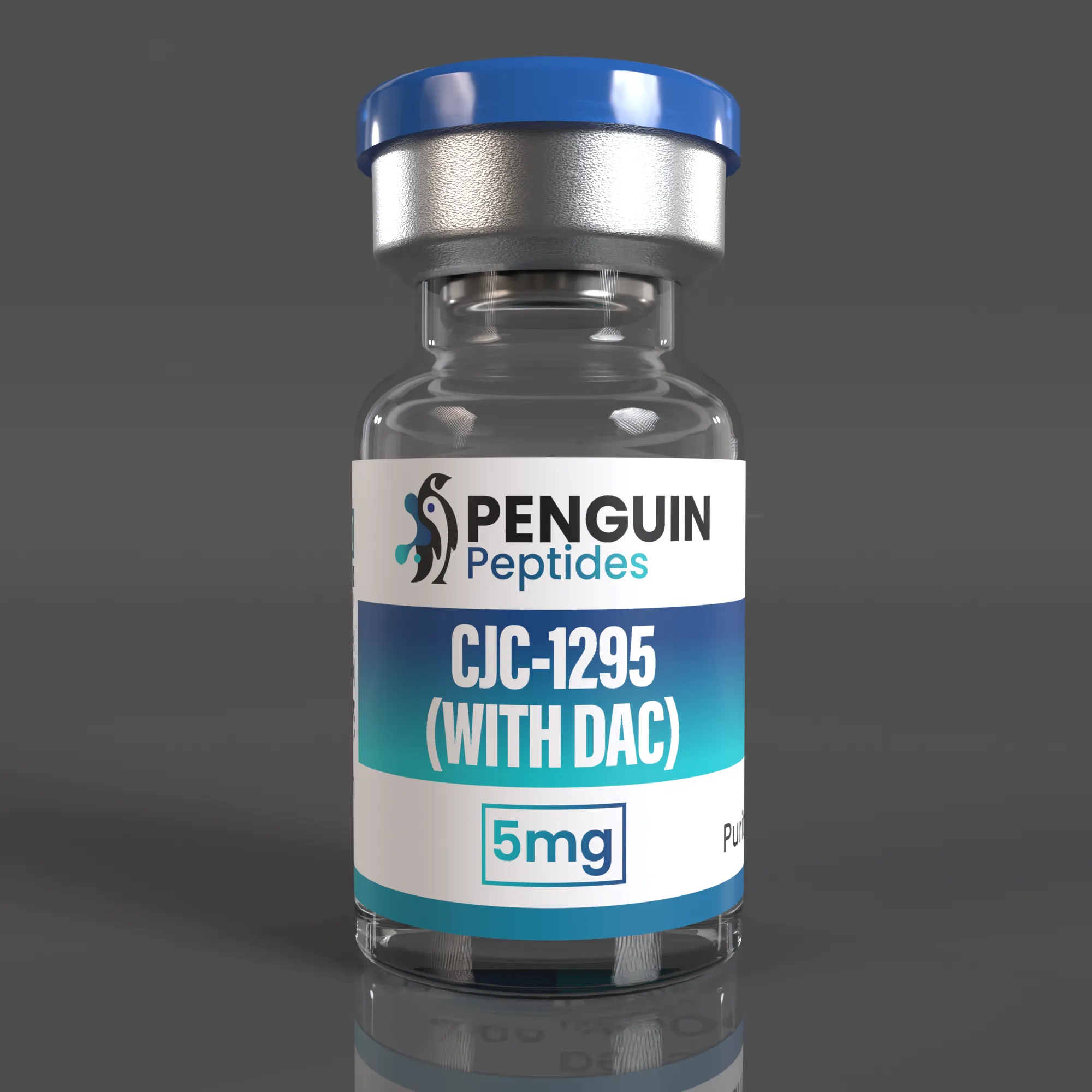
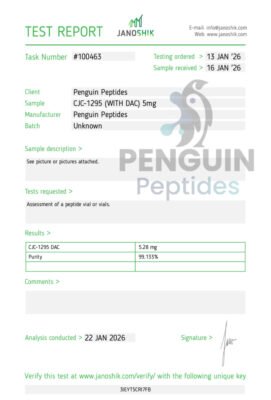
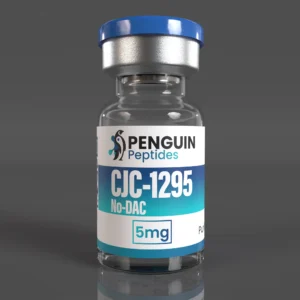
When purchased as a CJC-1295 with DAC 5mg vial, it means the lyophilized (freeze-dried) powder contains exactly 5 milligrams of the active peptide, providing a substantial amount of material for extended research protocols.
How Does CJC-1295 with DAC Work?
To understand the mechanism of CJC-1295 with DAC, we must look at the endocrine system. The peptide acts on the pituitary gland, stimulating the somatotroph cells to produce and release endogenous growth hormone.
Because of the DAC modification, the peptide does not clear from the bloodstream quickly. Instead, it creates a “depot” effect. As the albumin-bound peptide slowly releases the active CJC-1295, it results in a continuous, sustained elevation of growth hormone and, subsequently, Insulin-like Growth Factor 1 (IGF-1) over several days.
This continuous release profile is fundamentally different from the natural “pulsatile” release of GH, which is why researchers often compare CJC-1295 with DAC to other secretagogues like Mod GRF 1-29.
Potential Benefits and Research Applications
In preclinical studies and anecdotal research, CJC-1295 with DAC has been associated with a wide array of physiological effects driven by elevated GH and IGF-1 levels. Key areas of research include:
- Muscle Hypertrophy and Recovery: Elevated IGF-1 promotes nitrogen retention and protein synthesis, potentially accelerating muscle growth and repair after intense physical exertion.
- Lipolysis (Fat Loss): Growth hormone plays a vital role in mobilizing fatty acids from adipose tissue, making this peptide a subject of interest in metabolic and weight-management research.
- Improved Sleep Quality: Many subjects in GH-optimization studies report deeper, more restorative slow-wave sleep, which is crucial for overall recovery and cognitive function.
- Anti-Aging and Skin Elasticity: Increased collagen synthesis and cellular regeneration are frequently observed in longevity research involving growth hormone secretagogues.
- Bone Density: GH and IGF-1 are critical for osteoblast activity, making this peptide relevant in studies concerning bone healing and osteoporosis.
CJC-1295 with DAC 5mg: Reconstitution and Dosage Guidelines
Handling a CJC-1295 with DAC 5mg vial requires precise reconstitution to ensure accurate dosing. Because of its long half-life, the dosing protocol differs significantly from short-acting peptides.
Reconstitution
Peptides must be reconstituted with Bacteriostatic (BAC) water. A standard protocol for a 5mg vial is:
- Add 2ml of BAC water to the 5mg vial.
- This yields a concentration of 2500mcg (2.5mg) per 1ml.
- Always swirl gently; never shake the vial, as peptides are fragile.
Standard Research Dosage
Because the DAC extends the half-life to roughly a week, daily injections are unnecessary and can lead to GH receptor desensitization.
- Typical Research Dose: 1mg to 2mg administered once or twice per week.
- Using the 2ml reconstitution example above, a 1mg dose would equal 0.4ml (or 40 units on an insulin syringe).
- Injections are typically administered subcutaneously (SubQ) into the abdominal fat, ideally before bed or on an empty stomach to maximize the GH response.
CJC-1295 with DAC vs. Mod GRF 1-29 (No DAC)
Choosing between the two versions of CJC-1295 depends entirely on the research goals:
|
Feature
|
CJC-1295 with DAC
|
CJC-1295 No DAC (Mod GRF 1-29)
|
|---|---|---|
|
Half-Life
|
6 to 8 Days
|
20 to 30 Minutes
|
|
GH Release
|
Continuous / Sustained
|
Pulsatile (Mirrors natural rhythm)
|
|
Injection Frequency
|
1 to 2 times per week
|
1 to 3 times per day
|
|
Best For
|
Convenience, sustained IGF-1 elevation
|
Mimicking natural GH pulses, avoiding GH bleed
|
Note: Many researchers stack CJC-1295 No DAC with Ipamorelin to create a synergistic pulsatile effect, whereas CJC-1295 with DAC is often used as a standalone compound.
Side Effects and Safety Considerations
While generally well-tolerated in research settings, the continuous elevation of growth hormone can lead to specific side effects. Researchers should monitor for:
- Water Retention and Edema: A common side effect of elevated GH, often manifesting as swollen hands or feet.
- Peripheral Neuropathy: Tingling or numbness in the extremities (carpal tunnel-like symptoms).
- Increased Hunger: GH can influence ghrelin levels, though CJC-1295 is less likely to cause extreme hunger compared to GHRP-6.
- Insulin Sensitivity: Continuous, non-pulsatile elevation of GH may potentially impact blood glucose levels and insulin sensitivity over long periods. Regular monitoring of fasting blood glucose is recommended in long-term studies.
- Injection Site Reactions: Redness, pain, or itching at the subcutaneous injection site.
Conclusion
CJC-1295 with DAC 5mg represents a powerful tool in the realm of peptide research, offering a convenient, long-acting method to elevate growth hormone and IGF-1 levels. Its unique Drug Affinity Complex allows for infrequent dosing while providing sustained physiological effects, making it highly valuable for studies on muscle recovery, metabolic health, and longevity.
However, because of its continuous release profile, careful attention must be paid to dosing protocols and potential side effects like water retention and insulin sensitivity. As always, proper handling, precise reconstitution, and rigorous safety monitoring are paramount when working with best research peptide supplier.
Related products
Brain Research
Price range: €52.00 through €83.00
Anti-aging Research
€52.00
Anti-aging Research
€134.00
Sexual Research
€42.00
Obesity Research
€55.00
Recovery Research
€42.00
Recovery Research
Price range: €54.00 through €105.00
Recovery Research
Price range: €39.00 through €60.00