
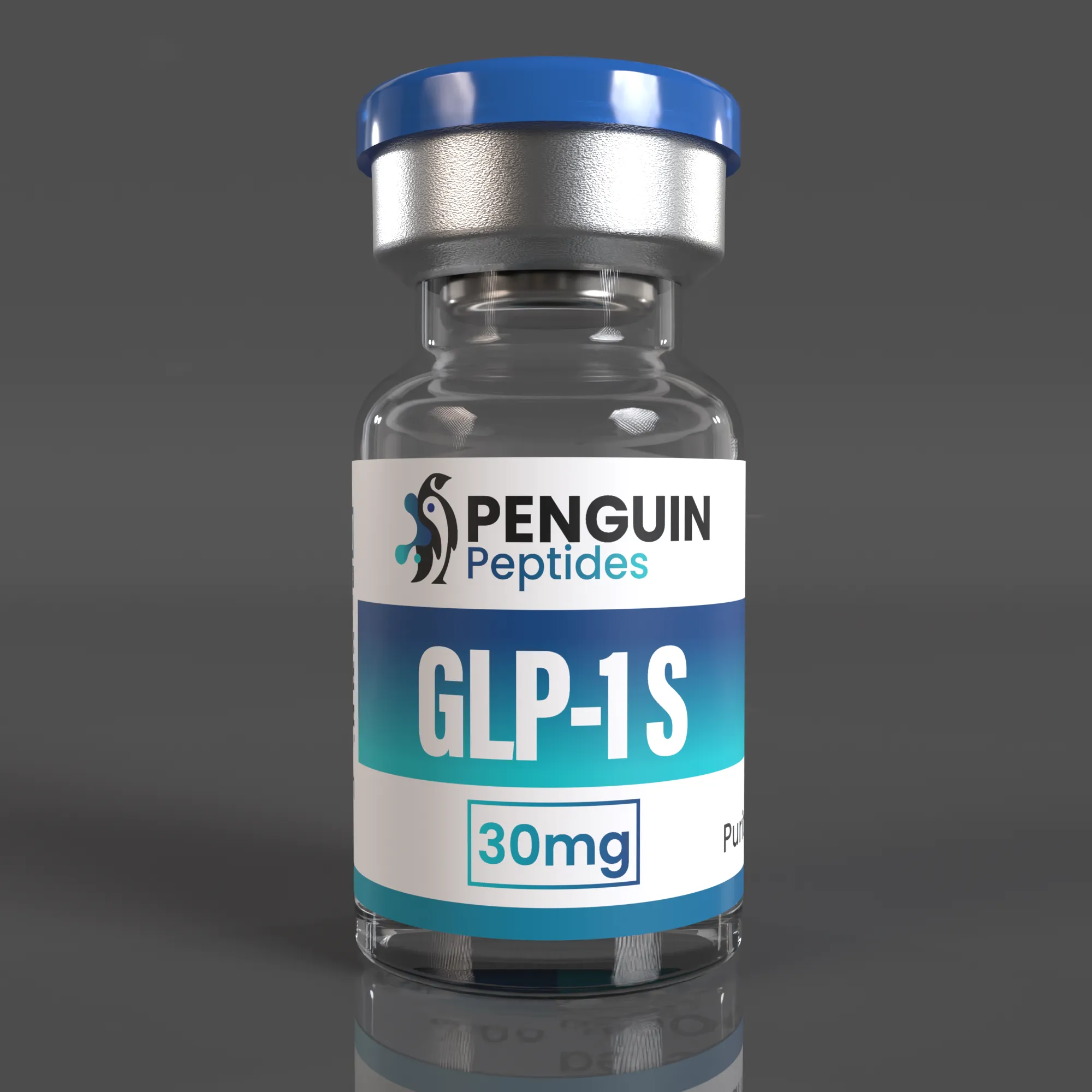
Buy GLP-1 S 5mg – 30mg Lyophilized Peptide
Price range: €59.00 through €150.00
In the rapidly evolving field of metabolic and endocrinology research, high-quality peptide analogs are essential for advancing scientific discovery. The GLP-1 S 5mg – 30mg Lyophilized Peptide has emerged as a highly sought-after research compound, offering scientists a reliable tool for investigating Glucagon-like peptide-1 (GLP-1) receptor pathways.
Comprehensive Guide to the GLP-1 S 5mg – 30mg Lyophilized Peptide
In the rapidly evolving field of metabolic and endocrinology research, high-quality peptide analogs are essential for advancing scientific discovery. The GLP-1 S 5mg – 30mg Lyophilized Peptide has emerged as a highly sought-after research compound, offering scientists a reliable tool for investigating Glucagon-like peptide-1 (GLP-1) receptor pathways.
Whether you are conducting pilot studies or large-scale in vivo metabolic assays, understanding the specifications, handling, and applications of this lyophilized peptide is crucial for achieving reproducible results.
What is the GLP-1 S Peptide?
The GLP-1 S peptide is a synthetic analog designed to mimic or interact with the GLP-1 receptor. In scientific literature, GLP-1 receptor agonists are heavily studied for their role in regulating glucose homeostasis, insulin secretion, and gastric emptying.
By utilizing the GLP-1 S 5mg – 30mg Lyophilized Peptide, researchers can investigate the downstream signaling pathways of the GLP-1 receptor, explore cellular responses in pancreatic beta-cell models, and study the broader metabolic effects of GLP-1 activation in animal models.
Product Specifications: 5mg vs. 30mg Vials
Our GLP-1 S 5mg – 30mg Lyophilized Peptide is available in two distinct vial sizes to accommodate various scales of laboratory research:
- 5mg Vials: Ideal for pilot studies, in vitro cell culture assays, and small-scale preliminary research. The 5mg size allows researchers to test dosing parameters without committing to larger quantities.
- 30mg Vials: Designed for extensive in vivo studies, long-term animal models, and high-throughput screening. The 30mg bulk size ensures consistency across large experimental cohorts and reduces the need for frequent reordering.
The Advantage of Lyophilization
Peptides are highly sensitive to degradation. The GLP-1 S 5mg – 30mg Lyophilized Peptide is supplied in a freeze-dried (lyophilized) white powder form. Lyophilization removes moisture, significantly extending the peptide’s shelf life and maintaining its structural integrity and biological activity until it is ready for reconstitution.
Key Research Applications
Researchers utilize the GLP-1 S peptide across multiple disciplines. Primary areas of study include:
- Metabolic Syndrome Research: Investigating the peptide’s effects on glucose tolerance and insulin sensitivity in murine models.
- Endocrinology Studies: Observing the stimulation of insulin release and suppression of glucagon in isolated pancreatic islet cells.
- Neurological Assays: Exploring the presence of GLP-1 receptors in the central nervous system and their potential role in appetite regulation pathways.
- Receptor Binding Assays: Utilizing the peptide to map receptor affinity and downstream cyclic AMP (cAMP) production in cell lines.
Proper Storage and Handling
To maintain the purity and efficacy of the GLP-1 S 5mg – 30mg Lyophilized Peptide, strict storage protocols must be followed:
- Long-Term Storage: Store the lyophilized powder in a freezer at -20°C. Properly stored, the peptide can remain stable for up to 24 months from the date of manufacture.
- Short-Term Storage: If kept in a standard laboratory refrigerator (2°C to 8°C), the lyophilized peptide is stable for up to 6 months.
- Post-Reconstitution: Once reconstituted, the peptide solution must be kept refrigerated (2°C to 8°C) and used within 14 to 21 days. Avoid repeated freeze-thaw cycles; instead, aliquot the reconstituted solution into smaller vials for long-term freezing.
Reconstitution Guidelines for Laboratory Use
Proper reconstitution is vital to prevent peptide degradation and ensure accurate dosing in your research.
- Preparation: Allow the vial of GLP-1 S 5mg – 30mg Lyophilized Peptide to reach room temperature before opening to prevent moisture condensation inside the vial.
- Solvent: Use sterile Bacteriostatic Water (containing 0.9% benzyl alcohol) or sterile water for injection, depending on your specific assay requirements.
- Technique: Direct the flow of the solvent gently down the side of the vial. Do not shake or vortex vigorously, as this can cause the peptide bonds to shear and denature. Gently swirl the vial until the powder is completely dissolved and the solution is clear.
Why Choose High-Purity GLP-1 S for Your Research?
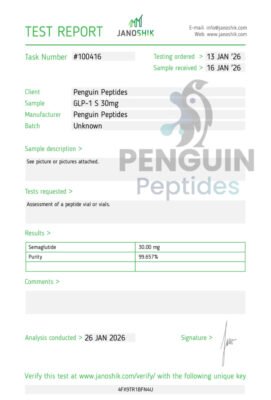
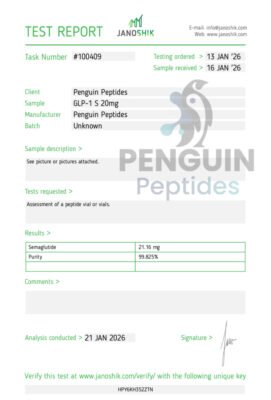
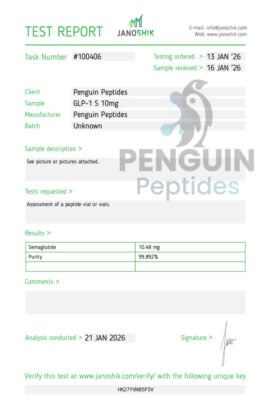
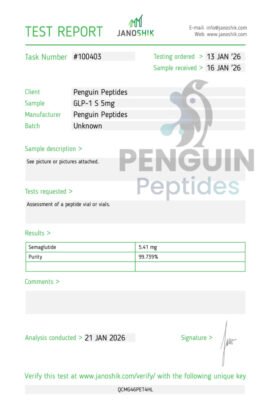
When sourcing research chemicals, purity is paramount. Impurities can lead to off-target effects, skewing data and compromising the integrity of your study. Our GLP-1 S 5mg – 30mg Lyophilized Peptide undergoes rigorous High-Performance Liquid Chromatography (HPLC) and Mass Spectrometry (MS) testing. Each batch is verified to ensure a purity level of ≥98%, providing you with the confidence that your research data is accurate and reproducible.
Frequently Asked Questions (FAQ)
Q: What is the difference between the 5mg and 30mg vials? A: The 5mg vial is optimized for small-scale, in vitro, or pilot studies, while the 30mg vial is cost-effective for large-scale, long-term in vivo animal studies. Both contain the exact same high-purity lyophilized peptide.
Q: How should I calculate the concentration after reconstitution? A: Concentration depends on the volume of bacteriostatic water added. For example, adding 1mL of water to a 5mg vial yields a 5mg/mL (5000mcg/mL) concentration. Always use a peptide calculator to determine your specific dosing volume for animal models.
Q: Is this product for human use? A: No. The GLP-1 S 5mg – 30mg Lyophilized Peptide is strictly sold for laboratory and scientific research purposes only. It is not for human or animal consumption outside of approved, regulated clinical trials.
| MG | 10 mg, 20 mg, 30 mg, 5 mg |
|---|
Related products
Obesity Research
€55.00
Obesity Research
Price range: €65.00 through €195.00
Obesity Research
€55.00
Obesity Research
Price range: €37.00 through €85.00
Obesity Research
€102.00
Obesity Research
Price range: €164.00 through €355.00
Recovery Research
€76.00
Obesity Research
Price range: €45.00 through €525.00